

Rats come in many different sizes, colors, coat types, and temperaments. Before trying to decide the coat types, patterns, or ear types you want to look for, start with a bigger and more important decision: male or female rats?
It’s an important decision that’s similar to choosing the sex of a dog or a cat – but there are even starker differences between male vs female rats!
Are male or female rats better pets? It depends on what you’re looking for. Do you want rats you can cuddle with? Super energetic and active rats? How much energy and care are you willing to put into introducing new rats to your mischief later? Read on to learn about male vs female rat anatomy, temperament, size, and more.
Male and Female Rat Differences
Male rats are the larger of the species weighing in at 450 to 650 grams on average. Female rats, however, are much smaller and range from 350 to 450 grams. Full-grown male and female rats average about 9 to 11 inches long excluding their tail. The soft, fuzzy tail adds an extra 7 to 9 inches to their length.
When put side-by-side, female rats are noticeably smaller and sleeker while male rats are larger and bulkier. This difference in bulk becomes more noticeable as they age and is partly due to the difference in behavior and activity. With age, male pet rats start to grow outward more than females and spend far more time sleeping, lounging, and snacking.
These sizes are only average – rats can be smaller or quite a bit larger. Dwarf rats, for example, are about one-third the size of a standard rat and remain about the size of an eight-week-old rat.
Male vs Female Rat Anatomy & Physiology
Rats are characterized by their black or red bulging eyes, long tail about the same length as their body, little legs, four front toes, and five hind toes. Unlike humans, they don’t have sweat glands, so they have to regulate their heat through their ears and tails. They do have slightly sharp nails which aren’t too bothersome, but they can be dulled by adding lava ledges to the cage or even clipping them if needed. Rats whiskers are much like cats in that they help them navigate their environment.
ignore his balls
by u/tobi-the-guy in RATS
How to Tell if a Rat Is Male or Female
Sexing a rat is possible from the day they’re born, but it can be tricky when they’re young if you aren’t sure exactly what to look for. Of course, as they reach maturity, it becomes very easy to differentiate male rats vs female rats.
While they are very young, or on hairless rats, you can sex rats in several ways:
- Only female rats have nipples with few exceptions. This is another way to sex baby rats. Rats are one of the only species mammals, along with horses and mice, in which males do not have nipples! This method isn’t 100% accurate for sexing, though; rats can be intersex too.
- Both have small nubs. On males, this is the penis sheath. On females, it’s the urethra.
- Girls will have a small vaginal opening underneath the urethra nub. The vagina is closed until they are 5-6 weeks old and sexually mature.
- On girl rats, there is a noticeable line from the vagina to the anus.
- The distance between the vagina and anus is smaller on girls compared to the distance between the penis and anus on males – this larger gap on males is where the testicles will appear as they mature.
As they get a bit older, the scrotal sac on males becomes more obvious. Their testicles drop around 2-4 weeks of age and grow dramatically in size from 4-6 weeks. Males are sexually mature around 50 days of age.
Male Rat Balls – A Deal-Breaker for Some Prospective Rat Owners

Many rat owners choose female rats instead of males for one simple reason: they don’t want to snuggle with a huge pair of balls with a rat attached.
Male rat testicles can be daunting and unnerving, but don’t let that deter you from these sweet boys! Interestingly, rat testicles weigh about 6g each which is about 4.4% of their body weight. In the vast majority of mammals, the testicles are less than 1% of body weight.
Female rats can be mated by multiple male rats, so the reason for the large size of their balls is to have a higher chance of fertilizing the female’s eggs. When there is no competition to breed a female, their testicles are somewhat smaller.
General Anatomy in Female Rats vs Male Rats
Male Rat Anatomy: Male pet rats have inguinal canals that help with the secretion of the hormones testosterone, estrone, and progesterone. They also have a baculum (os penis), a penis bone found in many mammals that prevents fracture of the penis during sex. Around their penis, they have a sheath (what we would consider foreskin) called the prepuce and also produce smegma! This prepuce is designed to protect it from friction, injury, and bacteria.
Male rats have testis and a scrotal sac, the vas deferens which is the ejaculatory duct, a prostate gland, a seminal vesicle that produces the sperm, bladder, a ureter that transfers urine from the kidneys to the bladder, kidneys, and adrenal glands.
Female Rat Anatomy: An obvious difference in male vs female rats is that females have two rows of 6 nipples with 12 nipples in total. Female pet rats also have inguinal canal which is a passage in the anterior abdominal wall that is used for males to mate with them. In their reproductive system, female rats have a clitoral gland, a vagina that lies behind the bladder, a cervix above the vagina, two uterine horns that expand toward the kidneys and then connect to the oviducts that connect to the ovaries, and adrenal glands.
Unlike the musky smell of male rats, females can have quite pleasant scents. Female rats in heat happen every 3-5 days for just a few hours, and you will find them mounting other females!
Odor Differences in Male and Female Rats
Male rats tend to smell more than female rats. They tend to scent mark and have stronger-smelling urine than females. In order to attract females, male rats produce what is called “buck grease” due to their sex hormones. This orange, oily grease produces a musky smell and leaves patches of fur a discolored orange color. It can be managed though.
Unlike the musky smell of male rats, females can have quite pleasant scents. Many people describe them as smelling like popcorn! With that said, male rats themselves do not have a very strong or unpleasant odor as long as their cage is kept clean and they’re able to groom themselves properly.
Male vs Female Rat Temperament & Behavior
What really sets male and female rats apart is their temperament and differences in behavior. If huge balls and moderate differences in odor aren’t enough to sway you one way or the other, this section should help you choose between female vs male rats.
Female Rats Are Energetic + Very Active
Female rats, and I cannot express this enough, are incredibly energetic. Sometimes they stay up all hours of the night playing and getting into trouble. Female pet rats will need even more enrichment and toys than boys – and they are more likely to destroy things in their cage and try to escape through any means possible.
Girls are always moving and looking for something to do but take short breaks from the play to sleep.
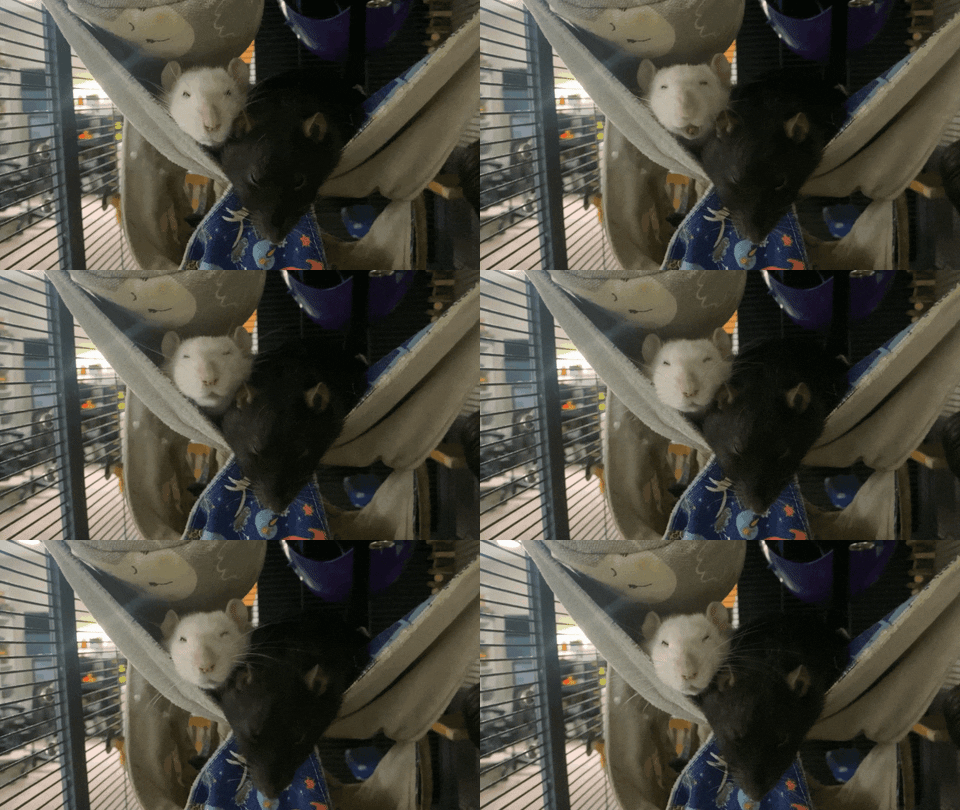
Male Rats Are Cuddly + Sleep More
Male rats are more likely to be found snoozing together in a pile or enjoying a snack than anything else. While they certainly enjoy playtime and exploring, they do this in short bursts then want to get comfortable again.
If you want rats that cuddle or take naps with you, you probably want boys. Any rat, though, if handled well from a young age will learn to be comfortable around you and love you. So let the cuddles begin!
Male Rats Form Tighter Relationships
Male rats and female rats can live in the same environment as long as they are spayed and neutered, but most people keep them separated. Male rats like to have their bros: they tend to form very tight bonds with each other and often have a best bud, a favorite friend for snuggling and exploring. Female rats have looser relationships with other rats.
It’s Easier to Introduce Female Rats vs Male Rats
When it’s time to introduce new rats to your mischief, you’ll find it’s easier with females vs males. Female rats are more accepting of new rats to the group while introducing boys takes more time and must be done more carefully.
Scent-Marking in Male vs Female Rats
Both sexes engage in scent-marking. Scrubbing is a type of scent-marking that males do to mark their territory by rubbing their scent on objects. Urine marking is done by male and female rats, but males are more likely to urine mark. Not all rats will urine mark. This behavior involves dribbling urine on objects (and people!) to mark them as their own.
Aggression in Male Rats vs Female Rats
Both male and female rats can display aggression, either towards other rats or humans. This may be due to trauma or mishandling, but otherwise it’s largely an issue of genetics and hormones.
Some female rats develop aggression during pregnancy. In most, this goes away after their litter is weaned, but in a percentage of females, the aggression becomes permanent. This is a heritable genetic trait.
In males, aggression is often hormonal. Once aggressive male rats are neutered, the aggression almost always disappears after their testosterone levels drop. This hormonal aggression is also a heritable genetic trait.
Female vs Male Rat Lifespan
In a study done in 2016, it was found that male rats’ average lifespan was 23.3 months with the longest being 31 months. The average female rat’s lifespan was 27.1 months with the longest being 32.3 months. In a scientific review, it was found that 95% of rats will die by the age of 3 years old.
Care, Health & Other Differences Between Male vs Female Rats
Dietary Needs in a Male vs Female Rat
There are some differences in dietary needs to be aware of. Male rats generally need to eat more than females given their larger size. When pregnant and nursing, female rats will also need more protein.
While citrus fruits are safe for females, many rat owners and breeders avoid giving any citrus to male rats due to a potential link to cancer. D-limonene, found in citrus peels, is carcinogenic for male rats specifically.
Cancer Risks in Female Rats vs Male Rats
Female rats are far more prone to developing cancer than male rats. The most common forms of cancer in pet rats are:
- Mammary fibroadenomas
- Pituitary gland tumors
- Testicular tumors
Mammary tumors are incredibly common in female rats. While they can be treated, they tend to be a recurring issue. Pregnancy reduces the risk a female rat will develop these tumors, but it’s certainly not an effective means of prevention. Having female rats spayed also reduces the risk, but spaying multiple rats is expensive and comes with risk.
Testicular cancer in male rats is usually benign, but it can be metastatic.
Pituitary gland tumors occur in male and female rats but more often in females. These tumors are a common cause of sudden death.
Are Male or Female Rats Better Pets?
If only there was an easy answer, but it is up to you and your preferences in a pet! Females are smaller, more active, and fun to play with, although they do come with more serious health concerns and they can be a lot to handle. Males are cuddlier, sleepier, and enjoy chilling out on a nice, cool day. Don’t let the huge rat balls deter you; you will easily get used to them and see them more of a body part than a sex organ.
Male vs Female Rat FAQs
Male rats generally are calmer and more docile. These rodents love to cuddle, sit on your shoulders, and relax.
Of course they can! Male rats bond well with their cage mates and have special relationships with particular rats. They may tussle occasionally, but that’s all fun for them. New male rats need to be introduced to the mischief carefully though, especially if the new rat or rats are sexually mature.
Yes. Male rats are about 450 to 650 grams in size (up to 1.4 pounds) while female rats are 350 to 450 grams (up to 1 pound) in size.
A female rat is referred to as a “doe” while a mother rat or pregnant rat is referred to as a “dam.”
Male rats are called “bucks.”
Aggressive behavior isn’t very common in male or female pet rats outside of trauma and poor breeding. Both can also develop aggressive behavior due to hormones which is a heritable genetic trait.
Male rats grow to about 450 to 650 grams (up to 1.4 pounds) or larger and about 20 inches in length including their tail.
Female rates grow to about 350 to 450 grams (up to 1 pound) or larger and about 20 inches in length including the tail.

